
The Shame of Shame
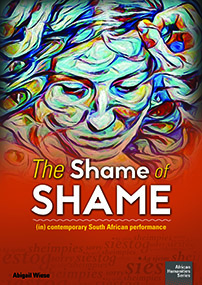
(in) contemporary South African performance
About the book
The Shame of Shame: (in) contemporary South African performance looks at the agency of shame, and how shame is the most intimate of affects and critical in the formation of our sense of Self, regardless of our recognition of it. The Shame of Shame examines contemporary South African performances as a way to think about shame, our unique experiences of shame and how these affective moments of shame might become hauntings that continue to linger, if not faced and given a form/voice/sound. Because the experience of shame is most central to our shaping and sense of Self, it needs to be faced, and not turned away from or mopped up into discarded parts of our memories. The writing of The Shame of Shame is an intimate and self-reflective engagement with shame, and one in which the author asks what it is that she feels in these encounters with shame. She questions how the aesthetics of performance evoked such feelings and how performance made her think about shame differently.
The Shame of Shame is an interdisciplinary study located at the intersection of performance studies, affect theory, shame theory, autoethnography and practice-led/research-led methodology. The Shame of Shame would be a helpful companion to anyone trying to process affects of discomfort, racism, Othering and an abjection of the Self.
Reviewer’s Comments
… this is the first time for me that this kind of affect studies is not self-indulgent, but truly self-reflexive. The originality of this work lies especially in the way it demonstrates a self-reflexive analysis of being touched, moved, affected by specific South-African performances, dealing with South-African history and context.
Professor Ernst van Alphen, Literary Studies, Leiden University, The Netherlands
The book certainly has merit as a strongly felt, thoughtful, and imaginative engagement with the theme of shame in contemporary South African theatre. It brings together a corpus of plays (and performance art, in the case of Stumbling Block) that have not been collected for comparative discussion before, nor have they been considered under the rubric of shame, as a field of high-level research and reflection. The methodology is innovative and speaks to the current zeitgeist in two, related ways: by invoking autoethnography and applying it to the experience afforded by the theatre, and by using a personal, even confessional stye that uses self-observed affect as a legitimate basis for developing knowledge.
Professor David Attwell, Department of English, University of York, UK and University of Western Cape, Cape Town, South Africa