
Small Tunas, Big Significance – African Journal of Marine Science
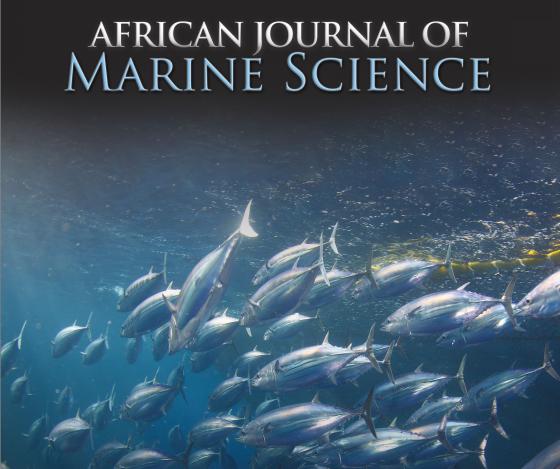
The sustainability of tuna stocks in the southwestern Indian Oceans remains a critical concern, with the stock status of tunas such as kawakawa Euthynnus affinis being poorly understood due to limited assessments although data available suggests potential declines.
The depletion of these stocks threatens marine ecosystem balance and has significant socio-economic implications, particularly for small-scale fishers who depend on them for food security and livelihoods. Therefore, strengthened stock monitoring and precautionary management approaches are urgently needed to prevent overexploitation and ensure long-term sustainability.
African Journal of Marine Science, Volume 47, issue 1 2025 includes a special suite of papers titled ‘Small tunas, big significance – the rising importance of skipjack tuna and kawakawa in the southwestern Indian Ocean’.
The suite of four tuna studies presented in this special issue collectively contributes to filling critical knowledge gaps in the management of skipjack and kawakawa fisheries in the southwestern Indian Ocean. The genetic study provides essential insights into stock structure for informing spatial management strategies while the research on reproductive biology highlights the need for targeted conservation measures to protect spawning stocks.
The value-chain analysis included in the special issue underscores the need for targeted gender-responsive interventions in the post-harvest sector to bolster sustainable livelihoods. Research is included on the recreational sector highlights the urgent requirement for this sector to be better understood, and the information fully integrated into management plans. The long-term sustainability of neritic tuna fisheries therefore requires an integrated approach combining ecological, economic and governance considerations.
Tuna play a vital ecological role as both predators and prey, and their decline can disrupt food webs, impacting vulnerable species like sharks, sea turtles and marine mammals, which are frequently caught as bycatch.
African Journal of Marine Science presents four studies addressing these challenges through genetic, reproductive and socio-economic analyses, providing a comprehensive framework for the sustainable management of fisheries for small tuna species in the region. Read this special issue at no cost until the end of June here.
.