
Most Birds can benefit from small, protected areas in West Africa
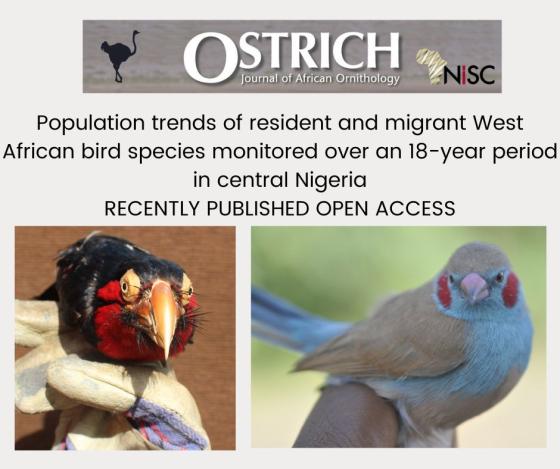
A recent Open Access paper published early online in Ostrich: Journal of African Ornithology has triggered reaction amongst the scientific community around the importance of long-term monitoring of resident and migrant West African bird species across the expansive area and habitats of West Africa.
The article titled “Population trends of resident and migrant West African bird species monitored over an 18-year period in central Nigeria” saw the authors monitoring bird population trends using constant-effort mist netting, in a newly protected area, Amurum Forest Reserve, on the outskirts of central Nigeria. Mist netting is an essential tool for species inventory, providing useful indices of relative abundance, and can be used to track temporal trends in abundance.
“The study used long-term constant effort capture-recapture bird data to illustrate the population trend of resident and migrant birds’ species and relating it to the changes in rainfall and vegetation greenness.” said First Author Ishong Akpanta Joy in an interview with NISC.
The changes in rainfall were collected from a weather station vegetation greenness was measured using Normalized Difference Vegetation Index (NDVI) variables over the years. The NDVI is a universally applied remotely sensed indicator for the characterization of surface biomass and can help differentiate bare soil from grass or forest for example.
The authors modelled the 18-year changes in trends of 10 Palearctic migrant and 41 common resident bird species and related this to any changes in annual environmental site quality using NDVI and rainfall data. “Most species’ population trends increased or remained stable, with a decline in only few resident species that use open, grassland areas as rainfall and vegetation variables within the habitat improves over the years,” said Ishong Akpanta Joy.
The findings add further weight to an argument that birds assemble in best sites suitable for their survival and the concentration of species within these sites differ from the overall density.
“The positive population benefits for both resident and migrant bird species within Amurum Forest Reserve shows its avian ‘refugium’ capacity and buttress the fact that effective management for protected areas with a long-term monitoring data outcome are relevant to tackle the fight for avian/ biodiversity conservation in West Africa,” said Ishong Akpanta Joy.
The study differs from most as it monitored a newly protected site and is scheduled to appear in a future printed Special Issue on African Eurasian Birds. Access the article here.
Photograph Credits: Ishong Akpanta Joy.