
Killer whale predation drives white shark absence
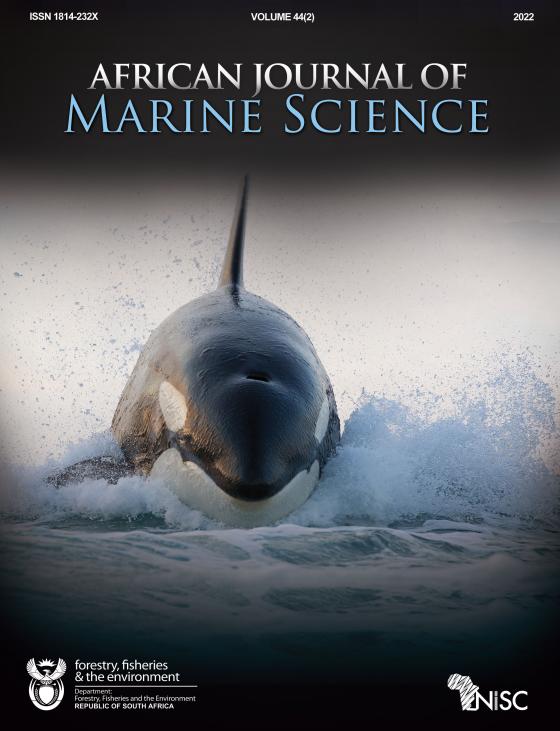
African Journal of Marine Science, Volume 44, Issue 2, includes a research paper on a topic that has garnered significant attention. A pair of Orca that have been terrorizing and killing Great White Sharks off the coast of South Africa since 2017 have managed to drive large numbers of the sharks from their natural aggregation site.
The research paper titled “Fear at the top: killer whale predation drives white shark absence at South Africa’s largest aggregation site”, uses long-term sightings and tagging data to show that Great Whites have been avoiding certain regions of the Gansbaai coast. These are territories which they have dominated over many years for fear of being hunted by Orca.
Since 2017 eight Great White Sharks have washed up on shore following Orca attacks. Seven of them had their livers removed, with wounds being distinctive and in line with the attacks made by this particular pair of Orcas.
The findings add further weight to an argument that suggests sharks use their ‘flight’ sense of fear to trigger a rapid, long-term emigration en masse when their marine predator is nearby. In this latest research, carried out over five-and-a-half years, 14 sharks have been tracked fleeing the areas when the Orcas are present and visual sightings have dropped dramatically in certain Western Cape Bays.
Reporting on the findings, lead author, Alison Towner, a Senior White Shark Biologist, at the Dyer Island Conservation Trust, says: “Initially, following an Orca attack in Gansbaai, individual Great White Sharks did not appear for weeks or months. What we seem to be witnessing though is a large-scale avoidance (rather than a fine-scale) strategy, mirroring what we see used by wild dogs in the Serengeti in Tanzania, in response to increased lion presence. The more the Orcas frequent these sites, the longer the Great White Sharks stay away."
“The research is particularly important, as by determining how large marine predators respond to risk, we can understand the dynamics of coexistence with other predator communities; and these dynamics may also dictate the interactions between competitors or intra-guild predator/prey relationship.”
The Orcas are targeting subadult Great White Sharks, which can further impact an already vulnerable shark population owing to their slow growth and late-maturing life-history strategy. Increased vigilance using citizen science (e.g. fishers’ reports, tourism vessels), as well as continued tracking studies, will aid in collecting more information on how these predations may impact the long-term ecological balance in these complex coastal seascapes.
As with all studies, alternative explanations for the findings should be considered. The authors suggest that sea surface temperature can have an impact on the Great White’s recent absence, “however, the immediate and abrupt decline in sightings at the beginning of 2017 and the extended and increasing periods of absence cannot be explained” by this. “Other potential explanations for a decline at Gansbaai,” they say, “could be direct fishing of Great White Sharks or the indirect effect of fishery-induced declines in potential prey”. However, they state that while this could “potentially contribute to an overall decline in numbers of Great Whites in South Africa, they are unlikely to explain the sudden localized decline”
This paper has been made available to read at no cost until the end of July here.