
Special Issue: Bridging the gap between research and language practice

Posted 13 May 2021 by under Announcements & Notices • Journal: Southern African Linguistics and Applied Language Studies
Special Issue: Bridging the gap between research and language practice
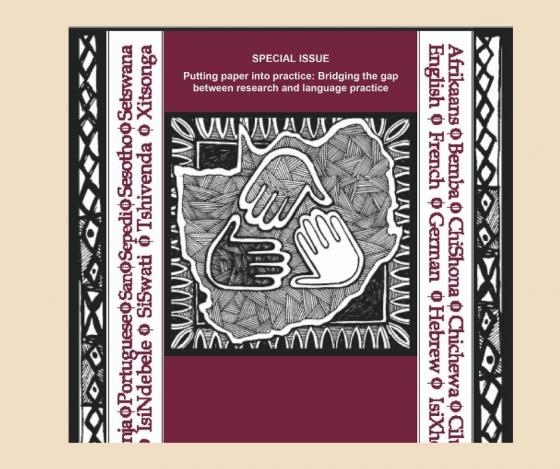
The field of language practice has grown exponentially in Africa, with South Africa enjoying international acclaim in subfields such as translation, editing and audiovisual translation. Issues relating to language in higher education and language policy are also widely researched on the continent and in the country. 

Established language practices within communities are not always led by research. The latest issue of Southern African Linguistics and Applied Language Studies aims to acheive this with Volume 39, Issue 1, 2021 being a special issue titled,  "Putting paper into practice: Bridging the gap between research and language practice."

Although the ideal will always be to implement practices, the reality is that policy will always influence whether and how this is possible. The first three articles in this special issue are proof of this and explore policy-related issues in higher education and in language revitalisation. In the first article, Yallew, Langa and Nkhoma investigate English language use in higher education and recommend that more attention should be given to strengthening the efficacy of using multiple theoretical perspectives to render the African contexts studied more intelligible.

Broadening the perspective but remaining in the field of education, Maseko examines teachers’ self-reported language ideologies and how they occasioned conflicting language practices with the top-down language-in-education policy in Zimbabwe. She argues that the mismatch between the top-down policy and bottom-up practices is mediated in part by a lack of broad-based considerations of the sociolinguistic, economic and political factors; and concludes that teachers’ views showed that translanguaging could be a welcome language management alternative to the ‘difficult to implement’ mother tongue instruction.

The issue also includes an article in the field of audiovisual translation where Matthew asks the critical question: Do additional visual elements in recorded lectures influence the processing of subtitles? He states that given the recent and sudden transition from classrooms to online teaching during the COVID-19 pandemic, more emphasis is being placed on providing the same classroom experience to students on an online (or e-learning) platform. To increase accessibility to online content, subtitles are sometimes added to videos, but this may come at a cost. The author continues to investigate whether the use of these subtitles are, in fact, contributing to accessibility.

De Vos and Nokele conclude the academic submissions to the special issue with an investigation into the role of translators in cross-language qualitative research in psychology. They argue that issues on the role of translators and information on translation processes in studies are often neglected or omitted in research reports, which may affect the trustworthiness of such studies. 

Have a look at this special issue online here

The proofs look great! Thank you so much. The efficiency of the journal now is really excellent. Easy to work with, and so thorough. I appreciate it.
- Regular SAJP Author on his first interaction with NISC
The biggest development in the history of Quaestiones Mathematicae was the association with NISC and to have the journal running in a very stable way without severe financial concerns.
- Barry Green, QM Editor
It has been an enriching experience working with such enthusiastic and professional people at NISC who have become more friends than business partners over the years.
- Stan Pillar, Editor of the African Journal of Marine Science (1996-2013)
The NISC partnership has benefited the Indo-Pacific Journal of Phenomenology by bringing sustainability, additional branding and marketing, a wider reach through its websites, and the added value of expertise in the very competitive world of publishing.
- Chris Stones, IPJP Editor-in-Chief since 2003
Thank you for the rare experience of a set of proofs on which I can find nothing to correct!
- SAJP author from Florida Atlantic University
Perhaps the most important change, in terms of bringing the Journal to a wider audience, has been its publishing in collaboration with the NISC (Pty) Ltd.
- Stan Pillar, Editor of the African Journal of Marine Science (1996-2013)
Since 1995, NISC has systematically built up competence and the necessary capacity in all aspects of publishing high-level research journals, with the professionalism needed to flourish in the increasingly competitive world of international research publications. No other publisher in South Africa commands the necessary technical skills, experience, competence, enthusiasm and resources to the same degree as NISC, in my view.
- Graham Baker, Editor of the South African Journal of Science (1973-2008)
The review process is quick and is being done within the reasonable time. After acceptance, NISC is also quick enough to send proofs and is very efficiently publishes the accepted paper online before its print version.
- Author - Southern Forests: A Journal of Forest Science
The paper was wonderfully laid out and rapidly published
- Author- Ostrich: Journal of African Ornithology
Excellent attention by editor-in-chief; very good work of reviewers; good time for review and processing.
- Author - African Journal of Range & Forage Science
The editorial experience was excellent: the reviewers were timely and their feedback was generative. The co-editor of the special issue was proactive about communicating information to me. In latter stages, the staff that shepherded the essay through the copy-editing stages was also very helpful and in good contact.
- Author - Eastern African Literary and Cultural Studies
A very supportive, personal and committed editorial team, which takes quality of the work very seriously. I learned a lot through the experience of publishing with Anthropology Southern Africa, and felt supported throughout the process.
- Author - Anthropology Southern Africa