
Breeding Ecology of the Madagascar Grebe Tachybaptus pelzelnii
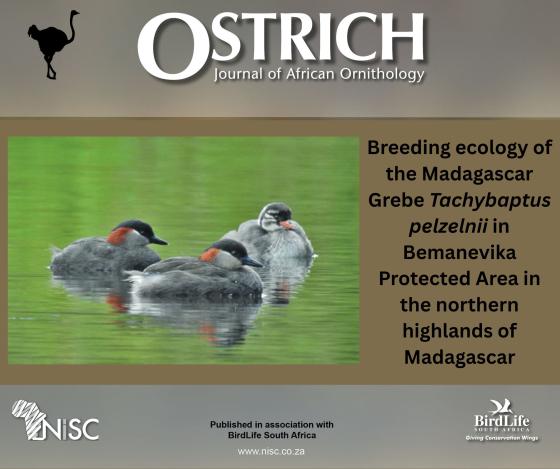
In Madagascar’s wetlands, the birds of this region stand out as the most studied animal group, with these wetlands serving not only as habitats for breeding, feeding and a place of rest for resident migrant species, but also as refuge for many migratory species.
The loss of Madagascar’s wetlands has become a major concern because of its impact on biodiversity, with the wetlands of the Bemanevika Protected Area (BPA) in the Northern Highlands of Madagascar comprising of lakes, marshes, and rivers, covering an area of 10 000 hectares.
Grebes are a quintessential aquatic group, with its members adapted to live on and under water. In Madagascar, this family is represented only by three species of the genus Tachybaptus: Little Grebe Tachybaptus ruficollis, Madagascar Grebe Tachybaptus pelzelnii, and Alaotra Grebe Tachybaptus rufolavatus. After the confirmed extinction of the Alaotra Grebe in 2010, the Madagascar Grebe remains the only endemic grebe species in Madagascar, and was classified as endangered since 2018 because of habitat loss due to decreasing quality and increasing disappearance of wetlands and intense fishing activity.
Ostrich Journal of African Ornithology 2025, Volume 96, Issue 1 includes an article titled “Breeding ecology of the Madagascar Grebe Tachybaptus pelzelnii in Bemanevika Protected Area in the northern highlands of Madagascar”. The study explored the ecology of this Grebe over two consecutive years (October 2020-September 2022).
Two breeding units were observed: pairs and trios made up of one male and two females. The evidence supported polygyny, over communal breeding, for the trios — the first record for the family. Researchers counted 147 occupied nests, of which 105 were monitored during the two breeding seasons: 78 nests with pairs and 27 nests with trios. Breeding activity occurred from October to April, with nest construction lasting on average 21.4 days.
This study provides new information on several aspects of the breeding biology of the endangered Madagascar Grebe, with the results providing baseline information that is essential for any strategies aimed at improving the conservation status of the species.
This article can be read at no cost until the end of June 2025 here.